
Facility managers handle exterior cleaning of tall buildings, glass walls, roofs, and other hard-to-reach areas. In most cases, this work needs lifts, scaffolding, or rope access. These methods take time to set up and can affect normal building activity.
Because of this, many managers are now looking at new ways to handle exterior maintenance. One method gaining attention is drone-based cleaning. It is used for selected exterior tasks where access is difficult or where setup time needs to be reduced.
When you look at commercial drone cleaning solutions, you start to see how this method fits into planning for modern buildings. It is not a full replacement for traditional cleaning. It is an extra option that helps with access, safety planning, and scheduling.
How Facility Managers Are Shifting To Drone-Powered Cleaning?
The points below explain why facility managers are reviewing drone cleaning for exterior building maintenance. Each point focuses on real planning needs like access, time, safety, and building use.
1. Work At Height Becomes More Controlled
Facility managers often deal with strict safety rules when work is done at height. Drone cleaning reduces the need for workers to stay on lifts, scaffolds, or rope systems for long periods. Instead of sending people into high-risk areas, the work is handled remotely from the ground.
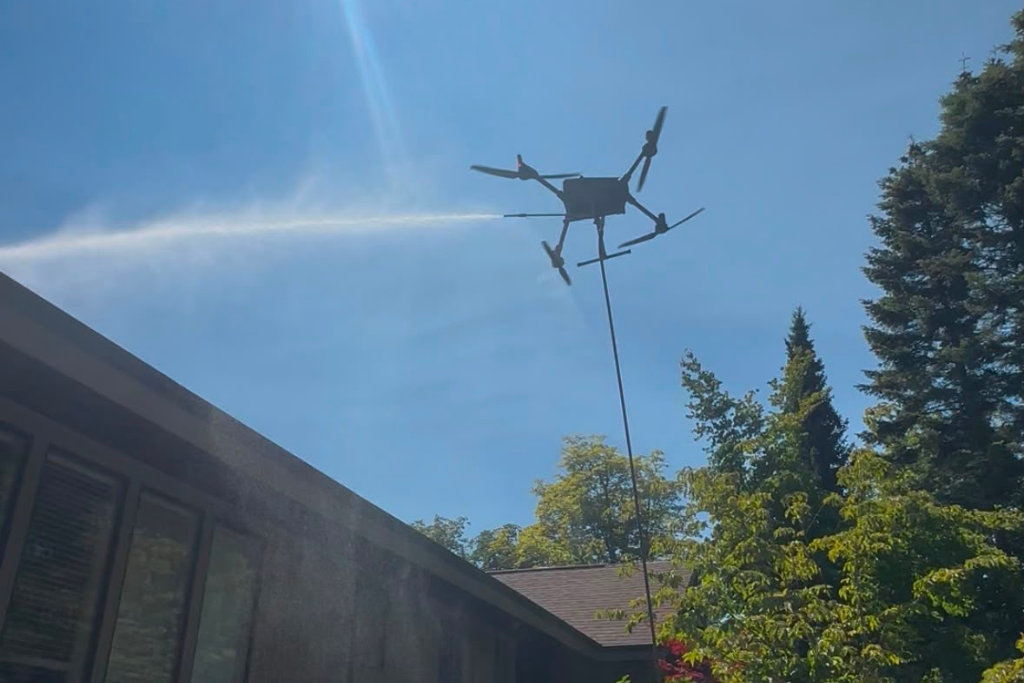
This helps make the process more controlled, especially for tall buildings where access is limited and safety checks take longer.
2. Less Interruption To Normal Building Use
Traditional exterior cleaning can block walkways, entrances, parking areas, and service zones. This often affects tenants, customers, or staff who use the building every day. Drone systems need less ground setup space, so normal movement around the building can continue with fewer disruptions. This is helpful for busy commercial sites where even short closures can cause problems.
3. Faster Setup For Cleaning Tasks
One of the main time-saving factors is setup. Scaffolding, lifts, and safety barriers take time to bring in and install. Drone cleaning removes many of these steps. The team can start work faster and also finish without long removal processes. This is useful when cleaning must be done within short time windows or between business hours.
4. Better Reach For Complex Building Shapes
Many new buildings have curved glass, narrow edges, deep corners, and mixed surface designs. These areas are hard to clean with manual tools or lifts. Drone systems can reach these sections more easily.
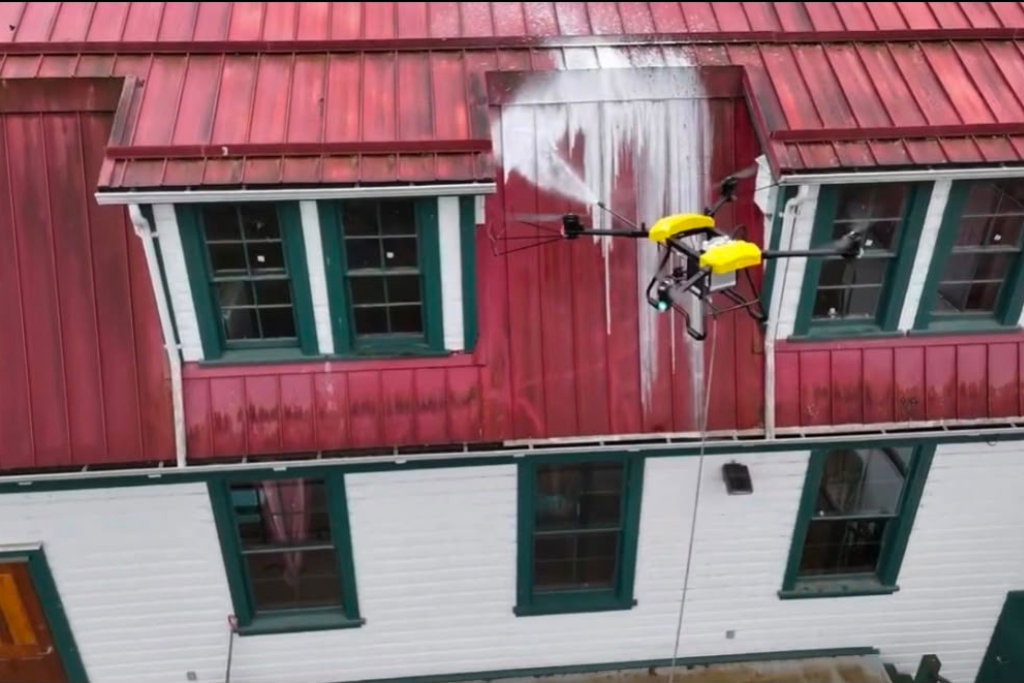
They can move around shapes that are difficult for traditional equipment to reach, which helps cover more of the exterior surface during planned maintenance work.
5. Easier Planning For Maintenance Schedules
Facility managers need to plan cleaning around tenants, events, and daily operations. Drone cleaning supports shorter and more flexible time slots. This makes it easier to schedule work early in the morning, after hours, or during low activity periods. It also reduces the need for long shutdowns of building areas during maintenance.
6. More Controlled Use Of Cleaning Solution
Drone systems allow controlled application of cleaning solutions. This helps manage how much water or cleaning material is used on each surface. It also helps reduce uneven cleaning, where some areas get too much and others too little. For large glass walls or exterior panels, this control supports more even coverage during each cleaning pass.
7. Basic Visual Inspection Support
Some drone setups allow basic visual inspection of surfaces. Facility teams can use this to check dirt buildup, stains, or damage before cleaning begins. After cleaning, the same view helps confirm whether the surface was properly covered. This improves planning for future cleaning cycles because managers can see actual surface conditions rather than guessing.
8. Less Heavy Equipment On Site
Traditional cleaning often needs lifts, cranes, or large scaffolding systems. These require transport, setup space, and time. Drone cleaning reduces the need for some of this equipment in specific exterior tasks.
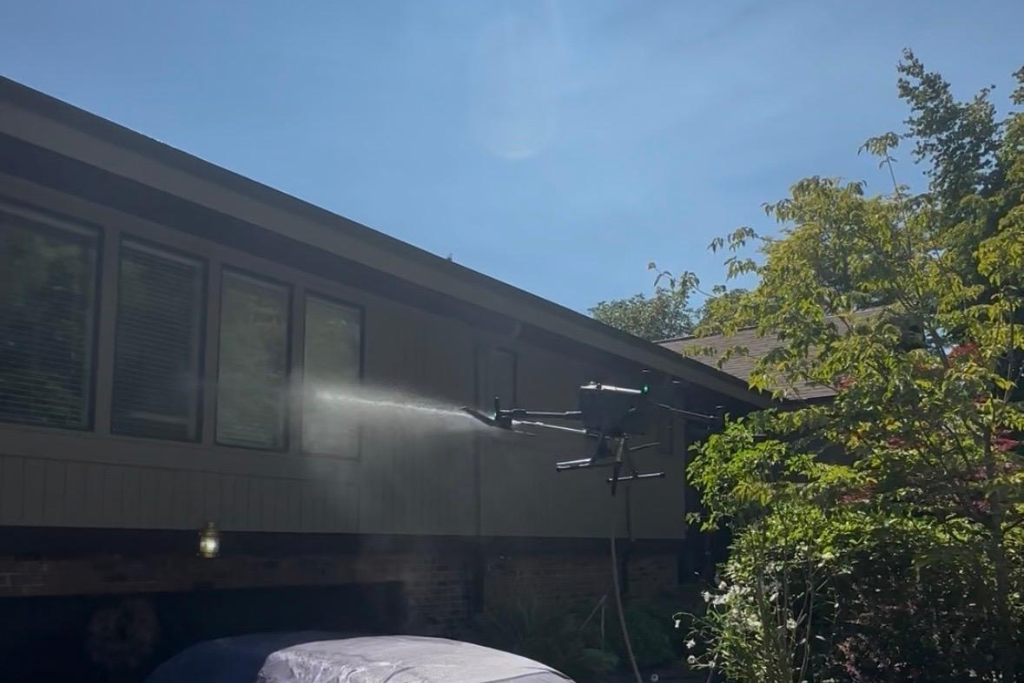
This means fewer machines on site, less space used, and simpler coordination for facility teams managing multiple buildings.
9. Easier Fit For Different Building Types
Facility managers handle different types of buildings, like offices, warehouses, retail centers, and industrial sites. Drone cleaning can be adjusted based on height, surface type, and structure design. This flexibility makes it suitable for different maintenance plans without changing the facility team’s full cleaning system.
10. Support For Regular Maintenance Cycles
Exterior cleaning is often done on a set schedule. Drone cleaning fits into these cycles as a planned service. It can be used for routine cleaning tasks where speed and access are important, without changing the full maintenance plan.
What’s Next?
Drone-powered cleaning is now part of how many facility managers think about exterior maintenance. It is mainly used for areas that are hard to reach or take too long to access using traditional methods. It does not replace all cleaning work, but it helps support it in specific situations.
You will often see it used when teams want to reduce setup time, keep building access open, and manage exterior cleaning more systematically. It also fits into planning for taller and more complex buildings where access is a regular challenge.
Skybot Drone Cleaning Inc. works with building owners and facility teams to support this approach to exterior cleaning. The goal is to help manage building surfaces in a way that fits normal operations without adding unnecessary disruption.